MODELING METHODS & TOOLS

COMPUTATIONAL MODELING METHODS
Discrete-Event Simulation
Discrete-event simulation is “the modeling of a system as it evolves over time by a representation in which the state variables change instantaneously at separate points in time. …These points in time are the ones at which an event occurs, … Although discrete-event simulation could conceptually be done by hand calculations, the amount of data that must be stored and manipulated for most real-world system dictates that discrete-event simulation be done a digital computer.” [1]
Monte Carlo Simulation
Monte Carlo simulation employs random number and to observe the fraction of numbers that obey the property/properties. [2] This method solves stochastic or deterministic problems, “especiallyuseful in studying systems with a large number of coupled degrees of freedom, such as fluids, disordered materials, strongly coupled solids, and cellular structures.[3]”
Markov Decision Processes (MDPs)
“The core problem of MDPs is to find a policy for the decision maker: a function A(s) that specifies the action A that the decision maker will choose when in state s. ”[4] “the set of available actions, the rewards, and transition probabilities are only depends on the current state and action not on states occupied and actions chosen in the past”[5]. Objective of the model is maximizing/minimizing total expected reward attained at every decision epoch by choosing the optimal actions at every decision epoch.
MACHINE LEARNING TOOLS
Logistic Regression Model
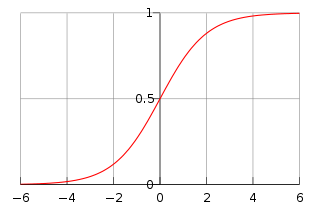
Used for prediction of the probability of occurrence of an event by fitting data to a logistic curve. Like many forms of regression analysis, it makes use of several predictor variables that may be either numerical or categorical. For example, the probability that a person has a heart attack within a specified time period might be predicted from knowledge of the person’s age, sex and body mass index. Logistic regression is used extensively in the medical and social sciences as well as marketing applications such as prediction of a customer’s propensity to purchase a product or cease a subscription.
Example of a logistic function
Artificial Neural Network Model (ANN)
Artificial Neural Networks (ANNs) are non-linear statistical data modeling tools that have the ability to duplicate aspects of human intelligence while incorporating the processing power of computers. Inspired by biological neural networks, ANNs consisted of highly interconnected models that are used to process information using a connectionist approach. They can process a large amount of information simultaneously by learning from previous cases and be used to model complex relationships between inputs and outputs or to find patterns in data. [7]
Bayesian Network Model
“is a probabilistic graphical model that encodes probabilistic relationships among variables of interest.”[8]¬† “For example, a Bayesian network could represent the probabilistic relationships between diseases and symptoms. Given symptoms, the network can be used to compute the probabilities of the presence of various diseases.”[9]

[1] Averill M. Law, W. David Kelton. Simulation modeling and analysis. 3rd ed. US: McGraw-Hill Companies, Inc; 2000. 760 p.
[2] Weisstein, Eric W. “Monte Carlo Method.” From MathWorld–A Wolfram Web Resource. http://mathworld.wolfram.com/MonteCarloMethod.html
[3] Wikipedia, Monte Carlo method, http://en.wikipedia.org/wiki/Monte_Carlo_method (optional description here) (as of Aug. 31, 2009, 17:46 GMT).
[4] Wikipedia, Markov decision process, http://en.wikipedia.org/wiki/Markov_decision_process (as of Aug. 21, 2009, 06:50 GMT).
[5] Puterman, M., Markov decision processes. 2005: Wiley-Interscience.
[6] Wikipedia, Logistic regression, http://en.wikipedia.org/wiki/Logistic_regression (as of Aug. 21, 2009, 09:38 GMT).
[7] Wikipedia, Artificial neural network, http://en.wikipedia.org/wiki/Artificial_neural_network (as of Aug. 22, 2009, 16:51 GMT)
[8] Heckerman David. A tutorial on learning with bayesian networks. Redmond (WA): Microsoft Research (US); 1995 Mar. 55 p. Report No. MSR-TR-95-06.
[9] Wikipedia, Bayesian network, http://en.wikipedia.org/wiki/Bayesian_network (as of Aug. 20, 2009, 23:47 GMT).